
Traveling to the UK With Your Dog After Brexit: What's Changed
Last updated: July 2026. By Mia Sgarlato, founder of Pet Passport Club
If you're traveling to the UK with a dog from the US, the first thing to know is that the UK plays by its own rules now. Brexit pulled Great Britain out of the EU pet system, so the process isn't quite the same as taking your dog to France or Italy, and there's one extra step that trips up almost everyone.
The good news: there's no routine quarantine anymore, and hasn't been for years, as long as you follow the rules. The catch: one of those rules has a very tight timing window, and it has to be done in the last few days before you land, not knocked out early with the rest of the paperwork.
The short version: To bring a dog into Great Britain from the US, you need an ISO-compliant microchip, a rabies vaccination given after the chip (with a 21-day wait if it's a first shot), a USDA-endorsed Great Britain health certificate issued within 10 days of arrival, and a tapeworm treatment given by a vet 1 to 5 days before you arrive. Follow all of it and there's no quarantine.
Who this is for: US residents flying to Great Britain (England, Scotland, or Wales) with a dog. If you're heading to the EU instead, the rules are close but not identical, so use a guide built for that route.
Does the UK still take EU pet passports?
No, and this is the Brexit part. Great Britain is outside the EU pet passport scheme entirely. An EU pet passport was never the document for a US-resident dog anyway, but it's worth saying plainly: there's no UK dog passport you can get as a US traveler. What you need instead is a Great Britain pet health certificate.
If you've read older articles that talk about pet passports for UK travel, they were written for a different era or a different audience (usually UK residents, pre-Brexit). For a US owner in 2026, the document is a health certificate, endorsed by USDA APHIS, much like the EU health certificate but issued for GB entry.
One terminology note, because it confuses people: you'll see "Animal Health Certificate" or "AHC" mentioned a lot for UK pet travel. That term is for pets coming into GB from inside the EU. Coming from the US, your document is the USDA-endorsed Great Britain health certificate. Same idea, different starting point.
The Great Britain health certificate
This is the core document, and it works a lot like the EU version. A USDA-accredited veterinarian examines your dog and completes the GB health certificate, then it gets endorsed by your regional USDA APHIS office. That endorsement has to happen within 10 days of your dog's arrival in Great Britain.
The building blocks underneath it are familiar:
An ISO-compliant microchip (15-digit, ISO 11784/11785), implanted before the rabies shot that counts.
A rabies vaccination given after the microchip, with at least a 21-day wait after a primary vaccination before your dog can enter.
The vet exam and certificate, timed so the APHIS endorsement lands inside that 10-day window.
If you've already done the EU process, this will feel like the same muscle memory. The tapeworm step is where GB goes its own way. Here's how the international health certificate process works end to end if you want the full walkthrough.
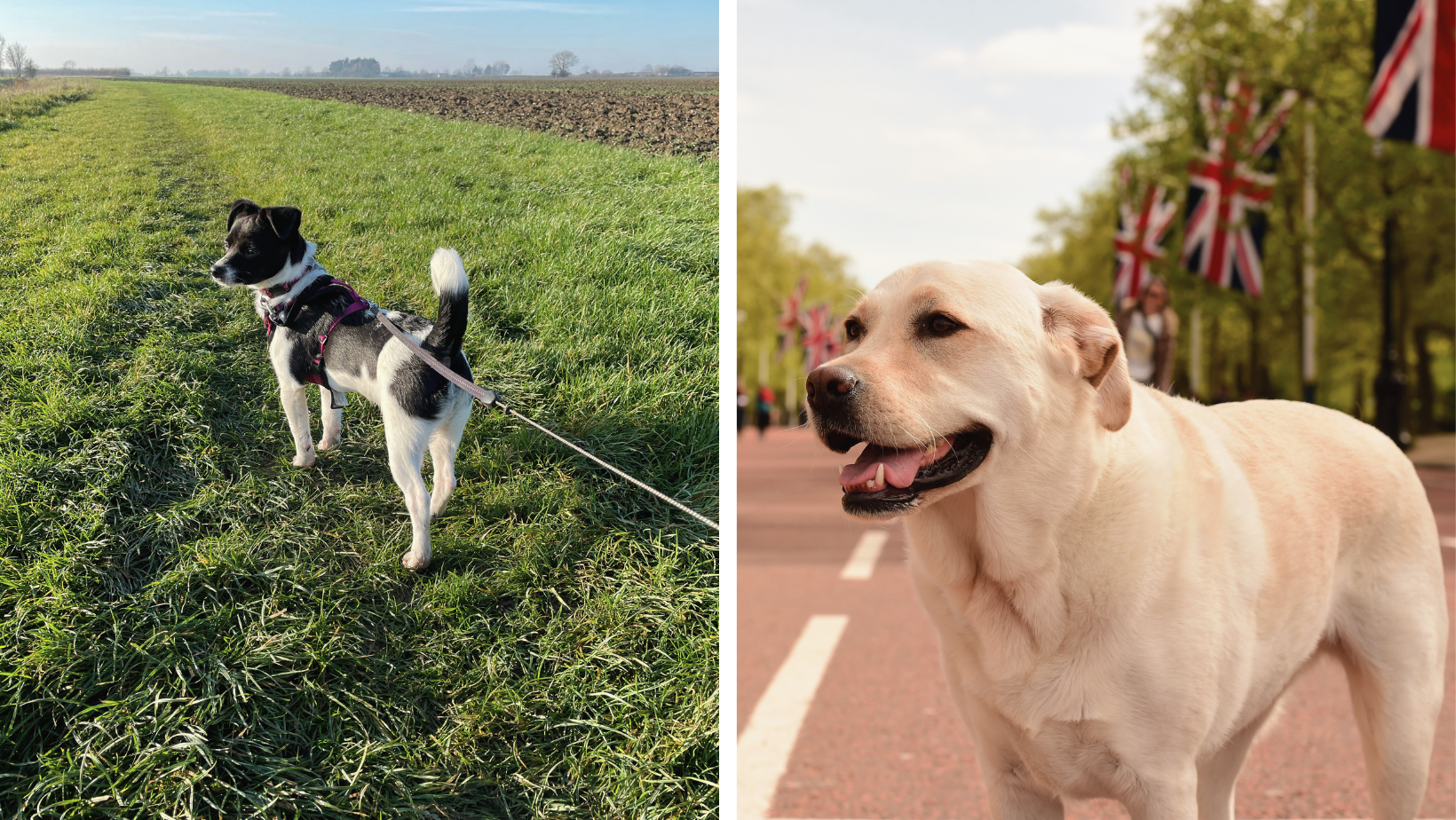
The tapeworm treatment (the step everyone forgets)
This is the one that's unique to the UK (and Ireland, Finland, Malta, and Norway), and it's the one that catches people out on timing.
Your dog has to be treated for tapeworm (specifically against Echinococcus multilocularis) by a USDA-accredited vet, and the window is strict: no less than 24 hours and no more than 120 hours (1 to 5 days) before you arrive in Great Britain. Your vet records it on the health certificate, including the brand of medication, the manufacturer, and the exact date and time.
For a direct flight from the US, this happens at your accredited vet before you leave, usually at the same visit that produces the health certificate, and then the certificate is endorsed by APHIS. The UK allows the tapeworm treatment to be given before or after the APHIS endorsement, so there's some flexibility in the order.
Tapeworm treatment timing mistakes
Here's the catch, and it's why people slip up: the treatment has to fall inside that 1-to-5-day window before arrival, so it can't be knocked out weeks ahead with the rest of the prep. It has to be timed to your actual travel dates. Treat too early (more than five days out), or hit a long stopover or a flight delay that pushes your arrival past the 120-hour mark, and your dog no longer meets the requirement at the border. The date and time have to be logged exactly.
This is the single most common reason a US owner runs into trouble entering the UK, and it's almost always a timing problem, not a missing treatment. If lining up that last treatment and the endorsement against your flight sounds like a lot to juggle, that's precisely the kind of thing our concierge service exists to coordinate.
Approved routes and flying into the UK
Here's a rule that surprises a lot of people: pets can't fly into Great Britain in the cabin. Other than registered assistance dogs, a pet entering GB by air has to travel as manifest air cargo on an approved airline and route (the UK government lists the current requirements on gov.uk). So on a transatlantic trip, your dog flies in the temperature-controlled hold as cargo, not under the seat with you, no matter how small they are.
That makes booking the flight its own project. Not every airline carries pets into the UK, the approved-route list is limited, and cargo space fills up, so it's worth sorting early. The paperwork can be flawless and you still can't fly if there's no approved cargo space for your dog. I compared the major carriers and their pet rules in a separate post on airline pet policies if you're still choosing a flight.
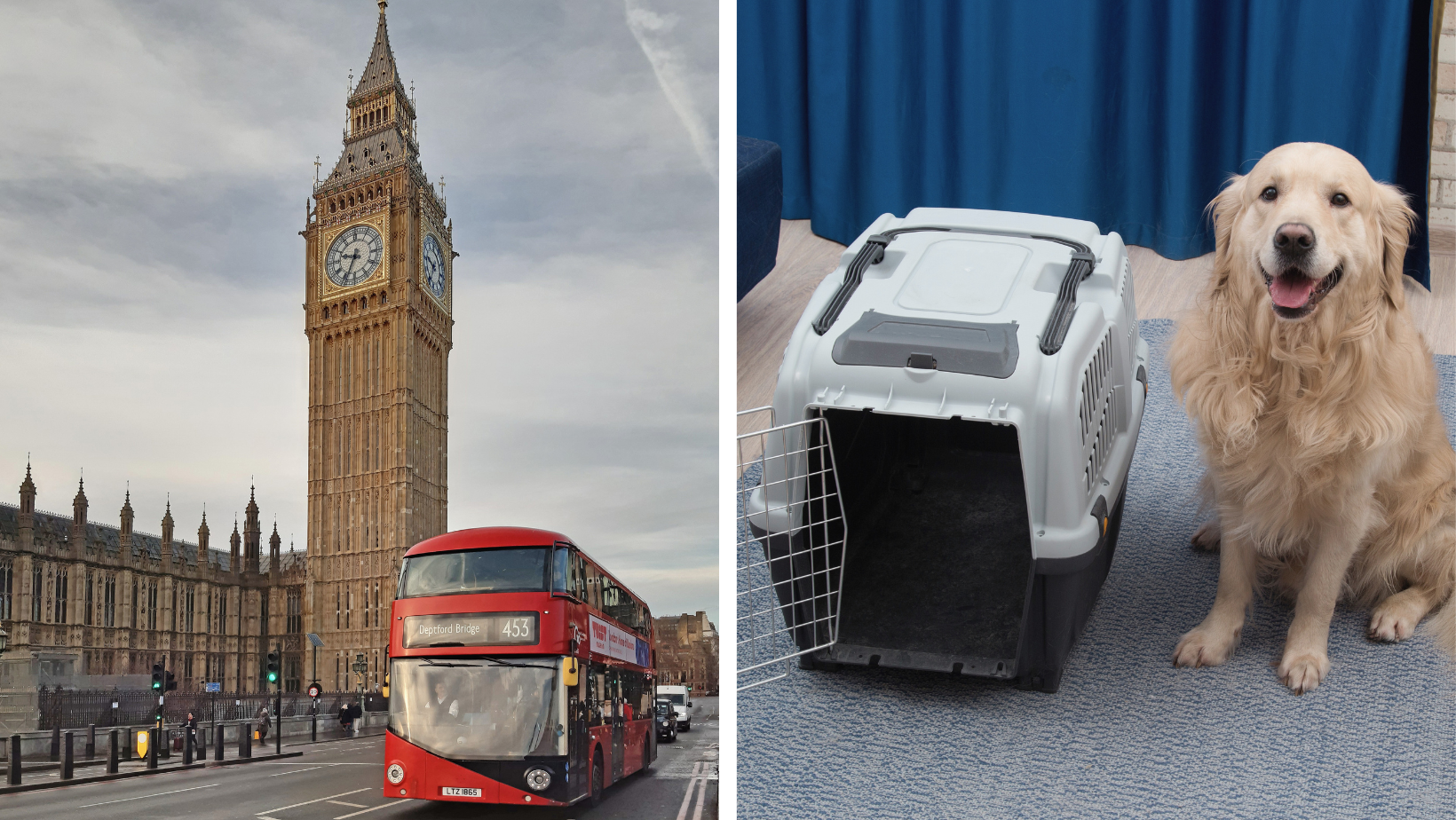
Do dogs need quarantine in the UK?
This is the fear that sends people down a rabbit hole, so let me be direct: no, there's no routine quarantine for dogs entering Great Britain, as long as you meet every requirement. The old six-month quarantine ended years ago.
Quarantine only comes into play if something is wrong:
a missing or invalid rabies vaccination
a microchip that can't be read
a tapeworm treatment outside the window
or an incomplete certificate.
In those cases a dog can be held (up to four months) or refused entry, at the owner's expense. That's the whole reason to get the details right the first time. I go deeper on how quarantine actually works in this post on international pet quarantine.
So the honest answer to "will my dog be quarantined?" is: not if the paperwork is complete and the timing holds.
Your UK trip checklist
Here's the order to actually do it in:
Confirm the microchip is ISO 11784/11785 compliant, implanted before the rabies vaccination.
Check the rabies vaccination was given after the chip and allow the 21-day wait for a first vaccination.
Book a USDA-accredited vet for the GB health certificate. Confirm accreditation first.
Time the certificate and APHIS endorsement to land within 10 days of arrival.
Plan the tapeworm treatment for 1 to 5 days before you arrive in Great Britain, with a vet who will record the date and time.
Confirm your airline and route are approved for pets and book your dog's spot early.
Carry paper copies of the certificate and your dog's records.
What I hear from other Pet owners
Poppy and I are more of a mainland-Europe pair, but the tapeworm rule is the UK detail I hear about constantly from other owners, and it's almost always the same story: everything was ready, the certificate was perfect, and then the travel dates shifted and the treatment landed outside the window.
The people who sail through are the ones who scheduled that final treatment tightly against their flight, the same way I learned to plan the boring parts of Poppy's trips on a schedule rather than hoping it works out. With the UK, getting that one bit of timing right is the whole ballgame.
Common mistakes US Pet owners make
Missing the tapeworm window. Too early or too late both fail. It has to be 1 to 5 days before arrival, recorded by a vet.
Assuming there's a UK pet passport. There isn't one for US travelers. The document is a USDA-endorsed Great Britain health certificate.
Confusing the AHC with your document. The Animal Health Certificate is for pets arriving from the EU. From the US, it's the GB health certificate.
Booking a non-approved route. GB requires an approved route and transport company. Confirm before you buy the ticket.
Worrying about quarantine instead of the details. Quarantine only happens if you miss a requirement. Get the details right and it's a non-issue.
Traveling to the UK With Your Dog FAQ
-
Yes. Your dog needs an ISO-compliant microchip, a rabies vaccination given after the chip, a USDA-endorsed Great Britain health certificate issued within 10 days of arrival, and a tapeworm treatment 1 to 5 days before entry. Meet all of it and there's no quarantine.
-
Not for US travelers. Great Britain is outside the EU pet passport scheme, and there's no separate UK passport a US owner can get. You use a USDA-endorsed Great Britain health certificate instead.
-
No, not if you follow every rule. Routine quarantine ended years ago. A dog can be held or refused only if a requirement is missing, such as an invalid rabies vaccination, an unreadable microchip, or a tapeworm treatment outside the window.
-
A vet must treat your dog against Echinococcus multilocularis between 24 and 120 hours (1 to 5 days) before you arrive in Great Britain, and record it on the health certificate. It applies to dogs, not cats.
-
The core steps are similar (microchip, rabies, USDA-endorsed health certificate), but the UK adds a mandatory tapeworm treatment and requires an approved travel route. The document is a Great Britain health certificate rather than the EU version.
-
At least a month for a straightforward case, longer if your dog needs a first rabies shot because of the 21-day wait. The tapeworm treatment is the one step that happens last, right before arrival.
Getting your dog Into the UK without the last-minute panic
None of this is hard on its own. The trouble is that the pieces have to line up in a specific order, and the tapeworm treatment has to be timed to the last few days before you land, right when you're already juggling flights and bags.
If you'd like a clear plan for your exact route, our Guided Travel Prep maps every step and every deadline. And if timing that final treatment and endorsement against your flight sounds like one thing too many, Full-Service Concierge handles the coordination so you can just travel.
The paperwork is the hardest part. We've got it covered.
— Mia + Poppy 🐾
